Add A Calculated Field To A Pivot Table

Spice Up Your Spreadsheets: Adding a Calculated Field to Your Pivot Table Ever felt like your pivot tables are missing that certain something? Like they're a great meal, but...
Spice Up Your Spreadsheets: Adding a Calculated Field to Your Pivot Table
Ever felt like your pivot tables are missing that certain something? Like they're a great meal, but you've forgotten the salt? Enter: the calculated field. It's like the secret ingredient that turns a good pivot table into a great one.
What's a Calculated Field, You Ask?
A calculated field is a custom-made field that you create within your pivot table. It's like a personal chef, cooking up new data based on the ingredients (or data) you've already got. It's not as scary as it sounds, promise.
Let's say you've got a pivot table breaking down sales by region and product. But you want to know the total sales for each region, or the average sales per product. That's where calculated fields come in. They're like your own little data butler, ready to serve up exactly what you need.
Must Read
Getting Started: The Basics
First things first, you need to be using a program that supports calculated fields. Microsoft Excel and Google Sheets both do, so you're probably already covered.
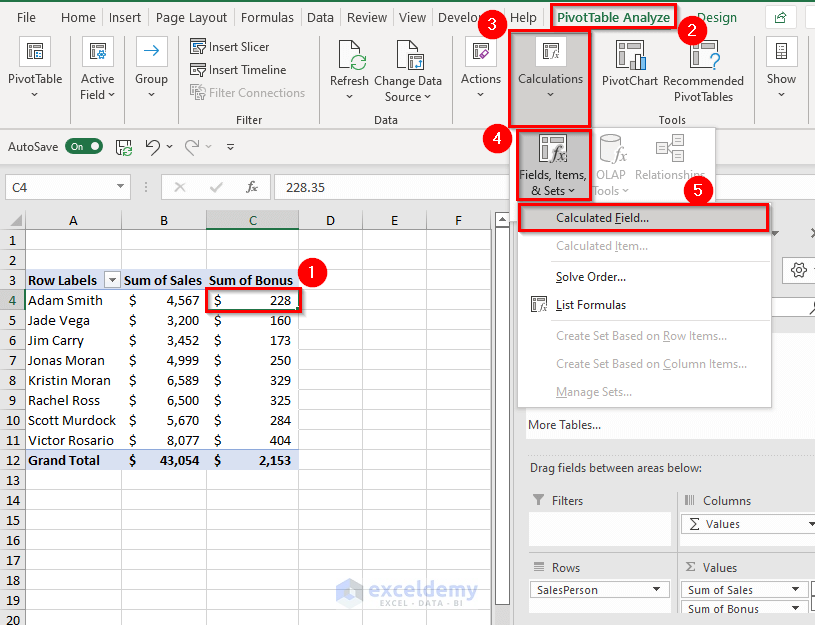
In Excel, you'll find the option to add a calculated field in the 'PivotTable Analyze' tab, under 'Fields, Items, & Sets'. In Google Sheets, it's a bit more hidden, but you can find it by right-clicking on your pivot table and selecting 'Insert calculated field'.
Creating Your First Calculated Field
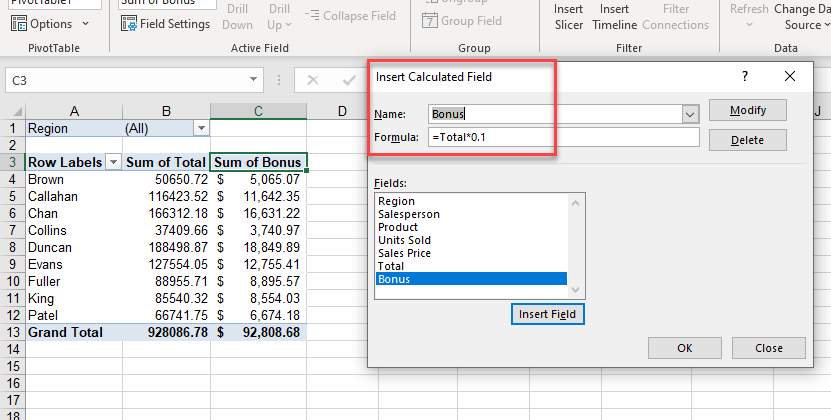
Let's say you want to create a field that shows the total sales for each region. You'd name your new field 'Total Sales' and then use the formula `=Σ Sales` (that's the Greek letter sigma, not an 's'). Easy, right?
Now, let's make it a bit more interesting. Say you want to find out the profit margin for each product. You'd need two fields: 'Sales' and 'Cost'. You'd name your new field 'Profit Margin' and use the formula `=(Sales-Cost)/Cost`. It's like a mini data recipe!
Remember, calculated fields are case-sensitive and don't like spaces. So, 'Sales' is different from 'sales', and 'Total Sales' isn't the same as 'Total sales'. It's a bit picky, but it's not wrong, it's just... particular.
Fun with Formulas
Calculated fields aren't just for simple sums and differences. You can use them to create all sorts of custom calculations. Want to find out the percentage of total sales each region represents? Use `=(Sales/Σ Sales)100`. Want to see the growth rate from one period to another? Use `=((Sales2-Sales1)/Sales1)100`. The possibilities are almost as endless as the data you've got.
 How To Use Calculated Field In Pivot Table Google Sheets - Design Talk
And here's a fun fact for you: Did you know that the Greek letter sigma, used to represent the sum of a series, is named after the mythical creature that guarded the gates of the underworld? It's like your data's own Cerberus, guarding the sum of your numbers.
Calculated Fields in Action: A Real-World Example
Let's say you're a marketing manager at a tech company. You've got a pivot table breaking down customer acquisition costs by channel and region. You want to know which channels are most cost-effective, so you create a calculated field called 'Cost per Acquisition' using the formula `=Customer Acquisition Cost/Number of Acquisitions`. Suddenly, you've got a whole new layer of insight into your data.
You can use this new field to sort your pivot table, filter your data, or even create a new chart. It's like you've given your data a new superpower. And who knows? Maybe you'll discover that TikTok ads are actually the most cost-effective way to acquire customers in the Midwestern US. Stranger things have happened, right?
Reflection: Data as a Tool for Discovery
Calculated fields are more than just a way to crunch numbers. They're a way to ask new questions of your data, to explore new angles and uncover new insights. They're like a secret door into your data, leading to a whole new world of understanding.
So next time you're staring at a pivot table, wondering what it could tell you if only it could talk, remember: it can talk. You just need to ask the right questions. And calculated fields are the key to unlocking that conversation.
So go on, give it a try. Your data's waiting to tell you a story. All you need to do is ask.
