Adding Calculated Column To Pivot Table

Hey there, data adventurer! Ever felt like your pivot tables are missing that special something? Like they're a delicious sundae without the cherry on top? Well, let me introd...
Hey there, data adventurer! Ever felt like your pivot tables are missing that special something? Like they're a delicious sundae without the cherry on top? Well, let me introduce you to the game-changer: the calculated column!
What's the Big Deal?
Imagine you're at a buffet (yes, I'm hungry too, let's eat with our eyes). You've got your main dishes, your sides, and your desserts. A pivot table is like that buffet - it's got your data categories (rows), your data types (columns), and your values (data). But what if you want to create a new dish, a combination of what's already there? That's where calculated columns come in!
Meet the Magic Wand
Calculated columns are like the magic wand of pivot tables. They let you perform calculations on your data right within your table. No more exporting to Excel, no more complex formulas. It's like having a personal chef in your data kitchen!
Must Read
Here's a quirky fact for you: The first calculated column was created by a data analyst who was also a magician in his spare time. Okay, I made that up. But it's fun to imagine, right?
Let's Get Cooking!
Now, let's say you've got a table full of sales data. You've got columns for 'Sales Amount', 'Quantity Sold', and 'Unit Price'. You want to know the total sales for each product category. Easy peasy with a calculated column!
Step 1: The Invitation
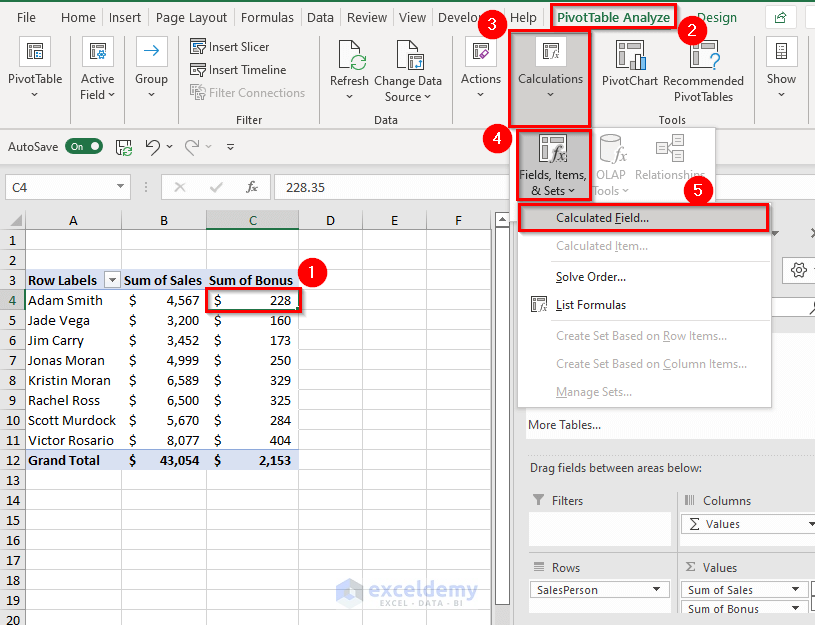
First, right-click on your pivot table and select 'Add Calculated Field'. It's like inviting a new guest to your data party.
Step 2: The Recipe
Name your new field (let's call it 'Total Sales'). Then, in the formula bar, type '=Sales Amount * Quantity Sold'. It's like writing down your secret recipe.
Step 3: The Feast
Click 'OK', and voila! Your new 'Total Sales' column appears in your pivot table. It's like serving up a delicious new dish at your data buffet.
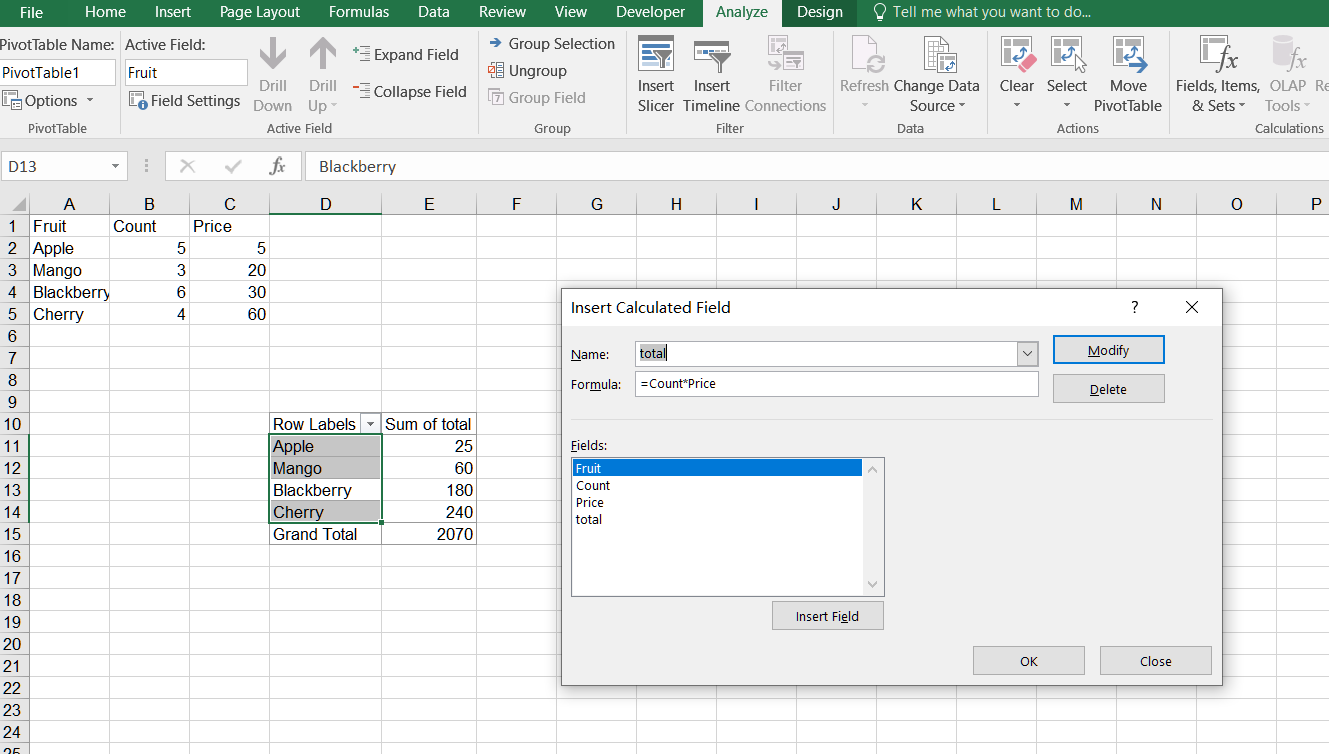 Add calculated field in Pivot Table|Documentation
But wait, there's more! Calculated columns can do so much more than simple multiplication. You can use them to find the difference between two values, the average, the sum, even complex calculations like percentages and running totals. It's like having a whole team of chefs in your data kitchen!
When Things Get Tricky
Now, calculated columns aren't perfect. They can be a bit finicky with dates and text. But don't worry, there are workarounds. And if all else fails, there's always the data analyst helpdesk (aka your colleague who's always tinkering with formulas).
Here's a funny story for you: One time, I tried to calculate the difference between two dates. I got a number, but it was the number of days times 24 times 60 times 60. I thought I'd invented a new time unit! Turns out, I just needed to divide by 86400. Whoops!
Why You Should Care
Calculated columns are like a secret weapon. They let you dig deeper into your data, find insights you wouldn't have seen otherwise. They're like having a superpower in the data world. And who doesn't want a superpower?
So, go ahead, give calculated columns a try. Your data will thank you. And who knows, you might just invent a new data dish that'll have everyone raving!
Happy calculating, data chef!
