Excel Pivot Table Add Calculated Column

Alright, gather 'round, folks. Today, we're going to tackle something that might sound as scary as trying to understand your neighbor's weird obsession with gnomes - Excel Piv...
Alright, gather 'round, folks. Today, we're going to tackle something that might sound as scary as trying to understand your neighbor's weird obsession with gnomes - Excel Pivot Tables and their nifty little trick called Calculated Columns. But don't worry, by the time we're done, you'll be as comfortable with this as you are with your favorite pair of jeans.
First Things First: What's a Pivot Table?
Imagine you're at a buffet (yes, the kind with tiny desserts under glass domes). You've got a mountain of data - sales figures, customer info, product details - all spread out like a smorgasbord. A Pivot Table is like your trusty plate. It helps you pick and choose what you want to see, and arranges it all neatly for you. It's the hero we need, but not the one we deserve.
Now, About Those Calculated Columns...
Ever been in a situation where you need to add a new column to your data, but you don't have the info? Like when you're trying to figure out how much you spent on pizza last month, but you only have the dates and the number of slices. That's where Calculated Columns come in. They're like your math-savvy friend who can figure out the total bill with just a few clicks.
Must Read
In Excel, a Calculated Column is a new column you create that performs a calculation using other columns. It's like having a little calculator sitting right there in your spreadsheet, doing all the heavy lifting for you. And the best part? You don't even need to know advanced math. If you can handle basic arithmetic, you're good to go.
Let's Get Our Hands Dirty
Alright, let's dive into an example. Say you've got a list of sales with 'Salesperson', 'Product', 'Quantity Sold', and 'Price per Unit'. You want to know the 'Total Sales' for each product. Here's how you do it:
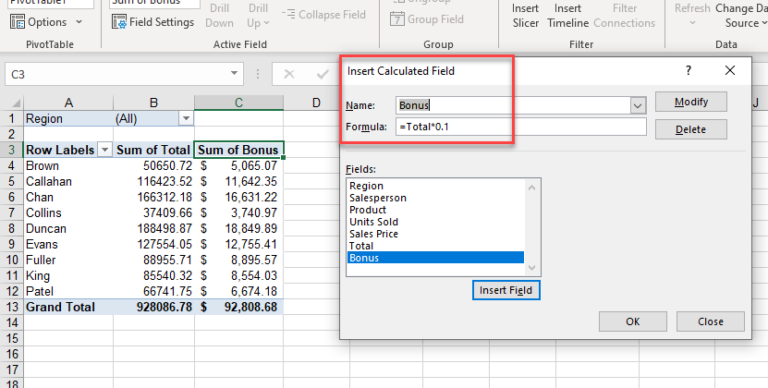
- Right-click anywhere in your data and select 'Insert Calculated Field'.
- In the 'Create Calculated Field' box, name your new field (let's call it 'Total Sales').
- In the 'Formula' box, type '=Quantity Sold * Price per Unit'.
- Click 'OK'.
And just like that, you've got a new column with the total sales for each product. It's like magic, but with less wand-waving and more mouse-clicking.
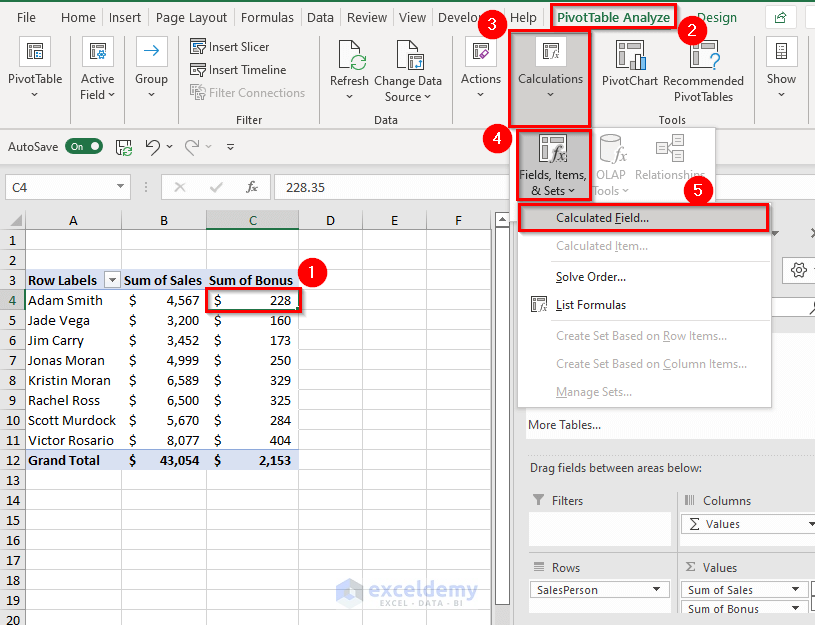 How to Use Calculated Field in Excel Pivot Table (8 Ways) - ExcelDemy
But Wait, There's More!
Calculated Columns can do more than just simple multiplication. You can add, subtract, divide, and even use functions like SUM, AVERAGE, or COUNT. Want to find out the average sales per product? Just create a new column with the formula '=AVERAGE(Total Sales)' and drag it down. Boom! Instant averages.
And the best part? Once you've created a Calculated Column, it updates automatically whenever your data changes. It's like having a personal assistant who never takes a coffee break (but also never brings you coffee).
So, Are You Ready to Be a Pivot Table Pro?
Hopefully, by now, you're feeling as confident as a toddler who just figured out how to open the fridge (which, by the way, is not a skill we encourage, but we understand the appeal). Calculated Columns are a powerful tool that can save you time and make your data work for you. So go forth, Excel warriors, and let the pivoting begin!
And remember, if anyone asks, you learned all this from a friendly article, not from a weird gnome obsession. Happy calculating!
