Find Links To External Sources In Excel

Hey there, Excel whiz! You're here because you're curious about finding links to external sources in Excel, right? Well, grab your coffee, let's dive in! Why Link to External...
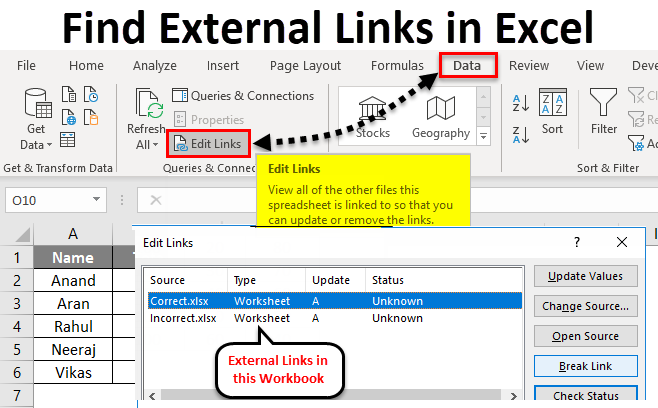
Hey there, Excel whiz! You're here because you're curious about finding links to external sources in Excel, right? Well, grab your coffee, let's dive in!
Why Link to External Sources?
First things first, why would you want to link to external sources in Excel?
Well, maybe you're creating a report that needs to reference data from another sheet or even another workbook. Or perhaps you're building a dashboard that pulls data from various sources. Whatever your reason, linking to external sources can save you time and keep your data up-to-date.
Must Read
Absolute vs Relative Links
Before we dive in, let's quickly chat about absolute and relative links. Absolute links point to a specific cell, no matter where it's moved. Relative links, on the other hand, change based on where the formula is placed.
Think of it like giving directions. An absolute link is like saying "Turn left at the big oak tree," while a relative link is more like "Go two blocks, then turn left."
Finding Links in Excel
Linking to Another Cell
Alright, let's start with the basics. Say you want to link to another cell in the same workbook. Easy peasy!
Just click the cell where you want the link, then type an equals sign (=). Next, click the cell you want to link to. Voila! Excel creates a link for you.
Linking to Another Workbook
Now, let's say you want to link to a cell in another workbook. No problem!
First, type an equals sign (=) in the cell where you want the link. Then, instead of clicking the cell, type the name of the other workbook followed by an exclamation mark (!) and the cell reference (like this: "=OtherWorkbook!A1").
Linking to an External File
What if you want to link to a cell in an external file, like a CSV or a text file? You can do that too!
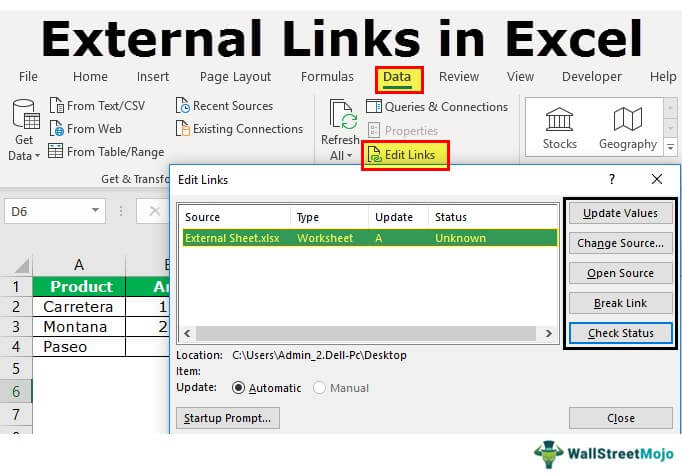 Excel External Links | How to Find & Remove External Links in Excel?
First, make sure the external file is in a location that Excel can access. Then, follow the same steps as linking to another workbook, but replace the workbook name with the file path and the file name (like this: "=C:\Users\You\Documents\Data.csv!A1").
Updating Links
Now, here's a handy tip. When you move or rename the cell that's being linked to, Excel updates the link automatically. Isn't that neat?
But remember, if you move or rename the workbook that's being linked to, you'll need to update the link manually. To do this, just click the cell with the link, then click the "Edit Links" button in the "Formulas" tab. Easy peasy!
Troubleshooting
Alright, so you've created your links, but something's not working right. Don't panic!
First, check that the path to the external file is correct. If it's not, Excel won't be able to find the file. Also, make sure the file is in a location that Excel can access.
If you're still having trouble, try creating a new link from scratch. Sometimes, Excel can get a little confused and needs a fresh start.
Wrapping Up
And there you have it, folks! You're now a linking pro. Whether you're linking to another cell, another workbook, or an external file, you've got this!
So, go forth and link with confidence. And remember, if you ever get stuck, just take a deep breath and ask yourself, "What would Excel do?" (Hint: It would probably tell you to have another cup of coffee.)
