How To Tell If You Sprained Your Finger

Ever found yourself mid-text, mid-game, or mid-gesture, only to realize you've tweaked your finger in a way that's less than graceful? You're not alone. Finger sprains are mor...
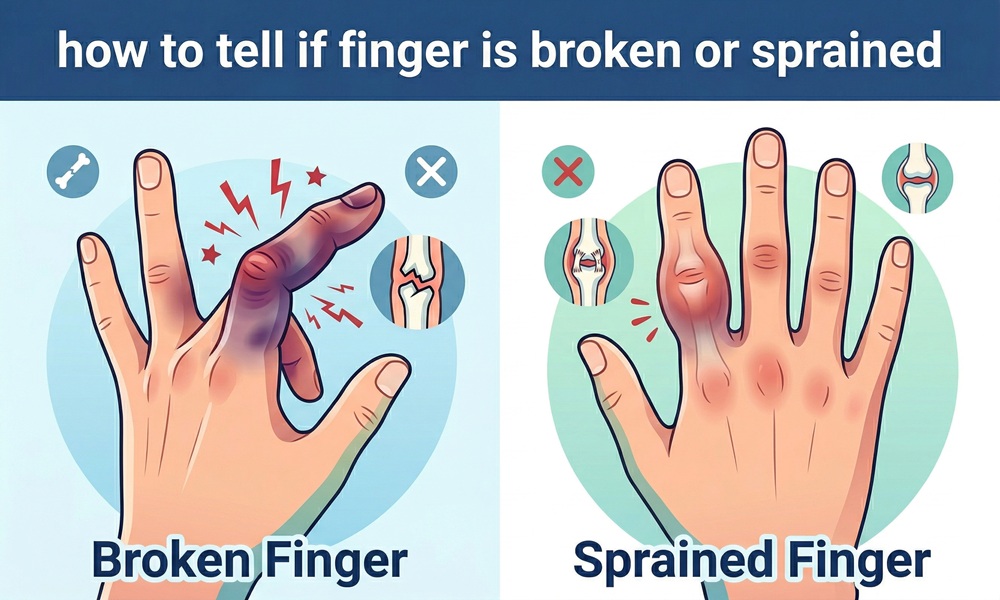
Ever found yourself mid-text, mid-game, or mid-gesture, only to realize you've tweaked your finger in a way that's less than graceful? You're not alone. Finger sprains are more common than you think, and they're not just reserved for athletes or those with clumsy tendencies. So, how can you tell if you've sprained your finger? Let's dive in, shall we?
First Things First: What's a Finger Sprain?
A finger sprain occurs when you stretch or tear the ligaments - the tough bands connecting bones to each other - in your finger. It's usually caused by forced bending or twisting, like when you jam your finger into something hard or catch it in a door. Ouch, right?
Now, before you start panicking, remember that not all finger twinges are sprains. Sometimes, it's just a minor strain or bruise. But knowing the difference can save you from unnecessary worry or, worse, ignoring a serious injury.
Must Read
Symptoms: Your Finger's Cry for Help
Pain
Pain is the most obvious symptom. It might be immediate and sharp, or it could develop gradually. It could also be accompanied by throbbing or aching, especially when you try to move your finger.
Swelling
Swelling is another telltale sign. It might not show up immediately, but within a few hours, you could see your finger start to puff up. This is your body's way of sending extra fluid to the injured area to help with healing.
Bruising
Bruising can occur within a few hours or even a day after the injury. It's your body's way of dealing with blood that's leaked from damaged blood vessels. And no, it's not just for dramatic effect in movies - it really can change colors, from red to purple to green to yellow.
Stiffness and Instability
You might find that your finger feels stiff or even unstable. It might be hard to move it like you normally would, or it could feel like it's wobbling around in there. This is your finger's way of saying, "Hey, something's not right here."
When to Worry: The Serious Stuff
Most finger sprains are minor and will heal with some rest, ice, compression, and elevation (RICE). But sometimes, they can be more serious. If you experience any of the following, it's time to see a healthcare professional:
 How to Tell if Finger Is Broken or Sprained: 9 Proven Easy Signs
- Severe pain and swelling
- Inability to move your finger
- Numbness or tingling
- Deformity - your finger looks crooked or out of place
- Pain that gets worse instead of better
And hey, if you're not sure, it's always better to err on the side of caution. A quick trip to the doctor could save you from a lot of pain and potential long-term damage.
Fun Fact: The Finger Sprain Hall of Fame
Finger sprains aren't just a common occurrence - they've also made their way into pop culture. Remember when Tom Hanks' character in "Cast Away" injured his finger and had to set it himself? Or when Harry Potter sprained his finger playing Quidditch? Yeah, even fictional characters aren't immune to this common injury.
Tips: How to Care for Your Sprained Finger
If you suspect you've sprained your finger, here's what you should do:
- Rest: Avoid using your finger as much as possible. This gives the ligaments time to heal.
- Ice: Apply an ice pack for about 15 minutes, four to eight times a day. This helps reduce pain and swelling.
- Compression: Wrap your finger with an elastic bandage to provide gentle compression. Make sure it's not too tight, though - you should still be able to feel your pulse.
- Elevation: Keep your finger elevated above the level of your heart to help reduce swelling.
And remember, it's not just about the injury itself. It's about how you take care of it afterwards. A little TLC can go a long way in helping your finger heal properly.
Reflection: The Silver Lining
So, you've sprained your finger. It's annoying, it's painful, and it's a reminder that even the smallest parts of our body are tougher than we think. But it's also a chance to slow down, to take a break, to appreciate the little things we often take for granted. Like typing, or holding a pen, or giving a high-five. Because sometimes, it takes an injury to remind us how amazing our bodies are, and how much we should cherish them.
And who knows? Maybe next time you reach for that door handle, you'll do it a little more gently. After all, our fingers deserve a little more TLC, don't you think?
