What's The Formula To Subtract In Excel

Let’s be real—Excel is like that one friend who’s *slightly* too organized, but somehow you keep coming back for their spreadsheets. One minute you’re happily adding numbers,...
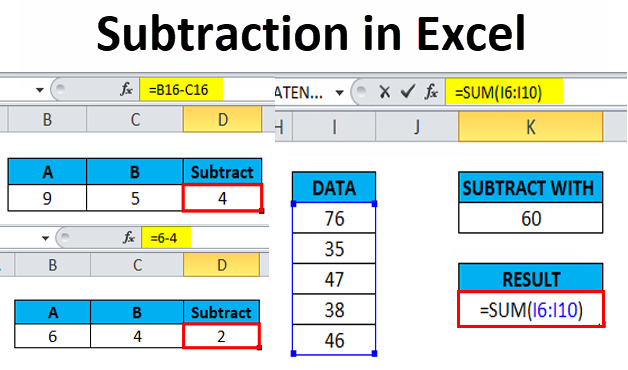
Let’s be real—Excel is like that one friend who’s slightly too organized, but somehow you keep coming back for their spreadsheets. One minute you’re happily adding numbers, the next you’re staring at a screen like, "Wait, how do I make this number go down?" Fear not, spreadsheet warrior. The formula to subtract in Excel is simpler than figuring out why your roommate ate the last slice of pizza.
Step 1: Find Your Numbers (Or Your Socks)
First things first: locate the numbers you want to subtract. If you’re anything like me, they’re probably buried under layers of half-finished budget sheets and memes of cats in Excel. Pro tip: Name your cells something useful, like "Income" or "Regret," instead of "CellA1" (which is just how Excel feels about your life choices).
Let’s say you’ve got 100 dollars in your bank account and you just bought a coffee that cost 3.50. You’re not a math genius, but you do know that 100 - 3.50 = 96.50. Congrats, you’ve just done the mental math Excel was born to automate.
Must Read
Where to Type This Magic
Open your spreadsheet and click on the cell where the answer should appear—maybe it’s where you’re supposed to write "I deserve this vacation" after seeing your new balance. Now, type an equals sign (=) like you’re about to drop a truth bomb. This is Excel’s way of saying, "Okay, what’s the deal?"
Next, type the first number, then a minus sign (-), then the second number. It looks like this: =100-3.50. Boom. Instant math. If Excel gives you a blank stare, double-check your numbers—maybe you accidentally typed =100-3.500 (which is just Excel’s way of judging your life choices).
Step 2: Press Enter (Or Just Accept Your Fate)
Hit Enter, and if everything’s correct, your cell will now display 96.50. Celebrate! You’ve just performed a subtraction so smooth, even your accountant would nod in approval. If it doesn’t work, don’t panic—Excel might be plotting something sinister, like turning your spreadsheet into a Rube Goldberg machine of doom.
Common mistake alert: If you forget the equals sign (=), Excel will just copy whatever was in the cell above. This is how spreadsheets turn into a game of telephone where the final message is "I quit" instead of the correct answer. Don’t be that person.
What If You’re Subtracting Cells?
Life gets more interesting when you’re subtracting entire cells instead of static numbers. Let’s say your income is in cell B2 and your expenses are in B3. Instead of typing =100-3.50, you’d type =B2-B3. Excel will automatically pull the numbers from those cells, like a digital butler fetching your coffee (but without the judgment).
This is where Excel starts to feel like a superhero. You change the numbers in B2 or B3, and suddenly, your savings cell updates itself. It’s like having a spreadsheet sidekick who’s always on your side—unlike your last roommate.
Step 3: Format Like You’re Dressing for a Date
Numbers can look as boring as a spreadsheet default. Spice it up! Right-click your cell, select "Format Cells," and choose a currency or percentage format. Suddenly, 96.50 looks like it belongs on a fancy receipt instead of a napkin scribbled in pen.
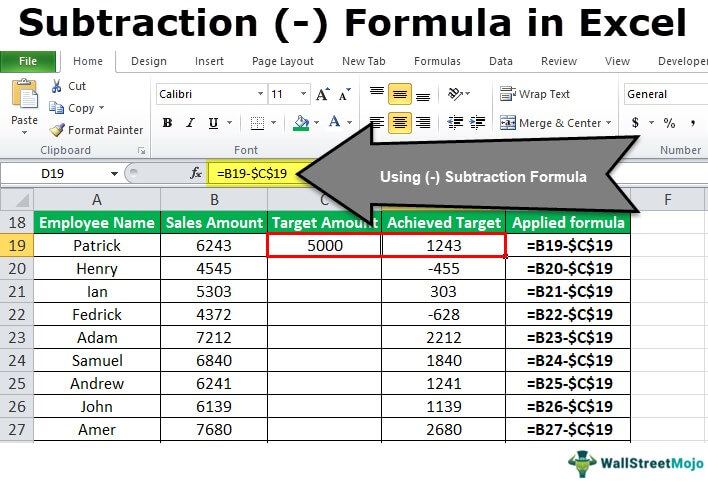
Pro move: Add a dollar sign ($) or a minus sign (–) to make it clear what’s happening. Example: =B2-B3 becomes =$B2-$B3 if you want Excel to treat those cells as fixed references (because sometimes you need to lock down your life choices).
 What's The Formula To Subtract In Excel | TAFT Independent
Absolute vs. Relative References: The Drama of Spreadsheets
Here’s where things get slightly confusing. If you copy your formula down a row and want it to always subtract the same cells (like B2 and B3), use $B2-$B3. The dollar signs ($) tell Excel, "Nope, I’m not moving these." Without them, Excel will think you’re a rebel and adjust the references like they’re playing musical chairs.
Imagine copying a formula down 100 rows and watching Excel’s little green triangle pop up like a warning sign. That’s Excel’s way of saying, "Hey, you might’ve made a mistake." Trust me, you’ve done it. We’ve all done it.
Step 4: Troubleshooting (Or How to Survive Excel’s Mood Swings)
What if your formula suddenly turns red and starts screaming #VALUE!? Don’t worry, it’s just Excel’s way of saying, "I don’t know what you’re doing." Check for typos, missing cells, or numbers that are hidden (because Excel loves hiding things, like your last text message).
Another classic error: #DIV/0!. This means you’re trying to divide by zero, which is like asking Excel to explain why your Wi-Fi keeps cutting out. The fix? Double-check your numbers. Maybe you subtracted more than you had, and now Excel is judging your financial decisions.
Bonus: Subtracting with Multiple Cells
Need to subtract more than two numbers? No problem. Just chain your subtractions like a math chain reaction. Example: =B2-B3-B4 subtracts B3 and B4 from B2. It’s like a spreadsheet game of musical chairs, but with fewer people and more numbers.
For even more chaos, use parentheses to control the order. Example: =B2-(B3+B4) adds B3 and B4 first, then subtracts from B2. Excel’s way of saying, "First, add the fun. Then, take away the regret."
Final Thought: Excel is Your Friend (Mostly)
Subtraction in Excel isn’t rocket science—it’s more like rocket anti-science. You’re not launching anything; you’re just making sure your numbers don’t explode into chaos. And if they do? Well, that’s why we have "Undo" (or at least, that’s what we tell ourselves).
Next time you’re staring at a spreadsheet, remember: Excel is just a tool. It doesn’t care if your budget is a disaster. It just wants you to type = and press Enter. And honestly? That’s enough to make anyone feel like a spreadsheet hero.
Now go forth and subtract with confidence. And if all else fails, just blame the Wi-Fi.
