Can You Substitute Self Raising Flour For Plain Flour

Flour Power: Can You Substitute Self-Raising for Plain? Ever found yourself mid-bake, only to realize you've run out of plain flour? Or perhaps you're curious about the scien...
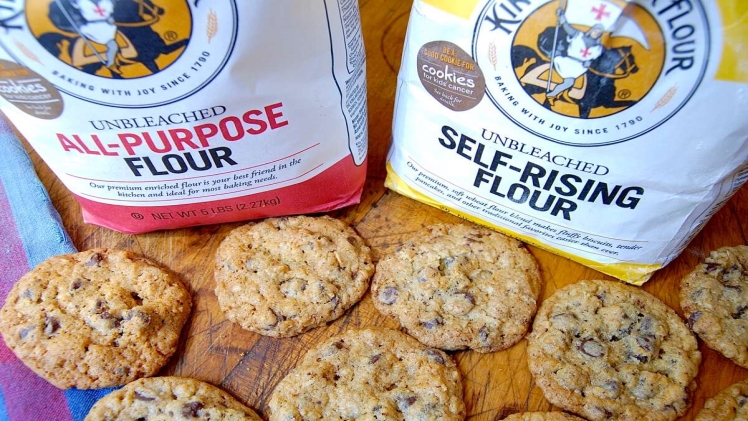
Flour Power: Can You Substitute Self-Raising for Plain?
Ever found yourself mid-bake, only to realize you've run out of plain flour? Or perhaps you're curious about the science behind these two kitchen staples. Either way, let's dive into the world of flour, where the difference between 'self-raising' and 'plain' can make or break your baking adventure.
Plain and Simple
Let's start with the basics. Plain flour, also known as all-purpose flour, is just that - plain. It's made from wheat that's been ground into a fine powder, with nothing added. It's versatile, used in everything from cookies to pasta, and it's what you'll typically find in most kitchens.
But here's where things get interesting. Plain flour contains a protein called glutenin, which, when combined with water, forms gluten. This gluten gives baked goods their structure and chewy texture. However, it's not always our friend. Too much gluten can make your baked goods tough and dense, while too little can leave them crumbly or flat.
Must Read
Enter: Self-Raising Flour
Self-raising flour is like plain flour's cooler, more confident cousin. It's made from soft wheat, which has less glutenin, making it gentler on your bakes. But the real magic happens with the addition of baking powder and sometimes salt. This is what gives self-raising flour its leavening power, helping your cakes and scones rise to new heights.
Think of it like this: plain flour is the silent, steady worker, while self-raising flour is the enthusiastic team player, ready to lift your bakes to the next level.
 How To Make Self-Raising Flour From Plain Flour - Charlotte's Lively
Can You Substitute?
Now, the million-dollar question. Can you substitute self-raising for plain flour? The short answer is yes, but with a caveat. Because self-raising flour contains baking powder, it will always add extra lift to your bakes. This can be great for cakes and scones, but not so much for cookies or pasta, where you want a more controlled structure.
If you're desperate, you can use self-raising flour in place of plain, but you might need to adjust your recipe. Try reducing the amount of baking powder or adding a little more liquid to balance out the extra lift. But remember, every substitution is a bit of a gamble, and you might not get the exact same result.
Fun Fact: The Leavening Revolution
Baking powder was invented in the 19th century, revolutionizing home baking. Before then, leavening was a complex process involving yeast or beaten egg whites. With baking powder, anyone could make light, fluffy cakes at home. It was a game-changer, and self-raising flour was born.
 How to Make a Self-Rising Flour Substitute in a Pinch
Practical Tip: Make Your Own Self-Raising Flour
Ran out of self-raising flour mid-bake? No problem. For every cup of plain flour, mix in 1 1/2 teaspoons of baking powder and a pinch of salt. Voila! Your own homemade self-raising flour. Just remember, it's best used fresh, as the leavening power can degrade over time.
Reflection: The Art of Adaptation
In life, as in baking, sometimes we have to adapt. Maybe we don't have the exact ingredient we need, or maybe we're trying something new. The key is to embrace the change, learn from it, and see where it takes us. After all, some of the best discoveries come from happy accidents in the kitchen.
So, go ahead, experiment. Try substituting self-raising for plain flour. You might just discover your new favorite recipe. Happy baking!
