How Long Does An Accident Stay On Your Insurance

Picture this: You’re driving home after a long day, maybe with takeout in one hand and your favorite playlist blasting, when—bam—someone pulls out in front of you. Your car ta...
Picture this: You’re driving home after a long day, maybe with takeout in one hand and your favorite playlist blasting, when—bam—someone pulls out in front of you. Your car takes a little hit, but you’re okay. You breathe a sigh of relief, call your insurance, and think, "Okay, that’s that." But then you start wondering: How long is this going to stick with me? Like that one weird song you can’t get out of your head, does an accident just… never leave your insurance record?
The short answer? It depends. But here’s the good news: no, it’s not forever. Think of your insurance history like a digital photo album—some pictures fade over time, and eventually, they’re just background noise. But how long does it actually take? Let’s break it down in a way that won’t make you want to hide under your blankets.
First, the Basics: What Even Counts?
Not all accidents are created equal. If you’re in a fender bender where no one’s hurt and the damage is minor, your insurance might just shrug it off like a bad Tinder date—no long-term consequences. But if you’re at fault in a more serious crash, that’s where things get sticky. Your insurer will note it, and it could affect your rates for a while.
Must Read
Here’s a fun way to think about it: Imagine you’re at a party, and someone tells a story about you that’s a little embarrassing. If it’s just one off-the-cuff joke, people might laugh and move on. But if you’re the one who actually spilled wine on the host’s favorite rug? That’s the kind of thing people remember for a while.
How Long Does It Really Stay?
Most insurance companies keep accident records on file for about three to five years. That’s right—after that, it’s like your insurance company has digitally erased the whole incident. But here’s the catch: your rates might not drop that fast. It’s like when you finally pay off that credit card debt, but your credit score still takes a while to recover.
For example, let’s say you’re in a wreck in 2023. Your insurer will likely keep it on file until 2026 or 2027. But if you’re a safe driver otherwise, they might start lowering your premiums before the record disappears completely. It’s like when you finally get your gym membership in order—your progress isn’t instant, but it’s still happening.
Why Should You Care?
You might be thinking, "Well, it’s not like I’m going to have another accident!" But here’s why it matters: insurance companies love patterns. If you have a clean record, you’re basically the golden child—low risk, low rates. But if you’ve got a few blemishes, they might start charging you like you’re a high-risk driver, even if you’ve been perfect since.
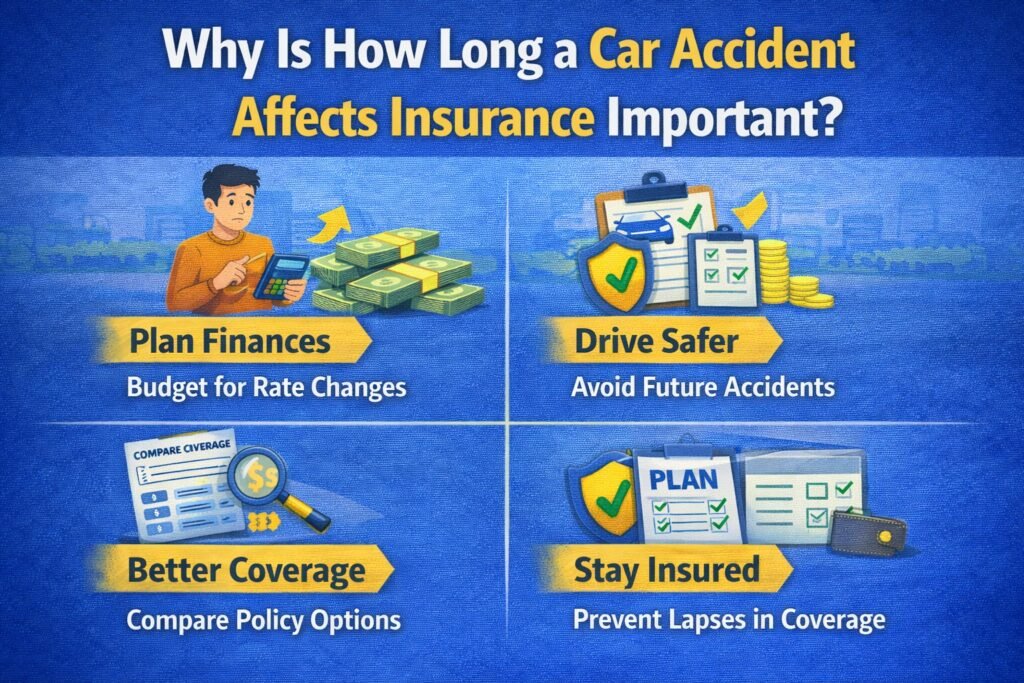 How Long Does a Car Accident Affect Insurance? - Insurence policy tips
Think of it like dating. If you’ve got one bad ex, some people might assume you’re all heartbreak. But if you’ve been single for years and then suddenly swipe right on someone amazing? They’re gonna think, "Whoa, this person’s got great taste!" Insurance works the same way—consistency matters.
What Can You Do to Speed Things Up?
If you’ve got an accident on your record and you’re tired of paying extra, there are a few ways to work your way back into favor. First, drive like you’re being watched—because you are. Safe driving habits can help your insurer see you as a lower risk.
Second, consider bundling your policies. If you’ve got car and home insurance with the same company, they might give you a discount for being a loyal customer. It’s like getting a free dessert when you order two meals—just for being a good customer.
And if you’re really committed, you could shop around. Some insurers are more forgiving than others, especially if you’ve been accident-free for a while. It’s like switching to a gym that doesn’t judge you for your past mistakes—just your current goals.
What If You Really Messed Up?
Okay, let’s be real—sometimes life happens. Maybe you were distracted, maybe you made a mistake, and maybe you’re now staring at a serious mark on your record. But even then, it’s not the end of the world. Many insurers have programs for drivers who’ve had at-fault accidents but are now being more careful.
 How long does an accident stay on your record? | InsuranceProviders.com
For example, some companies offer "accident forgiveness" policies, where they won’t raise your rates after your first accident. It’s like getting a do-over in a video game—you still took the hit, but the game lets you keep playing.
And if you’re worried about your rates staying high, remember: time is your best friend. Every year you drive without incident is another step toward proving you’re a safe bet. It’s like paying off a loan—once it’s gone, it’s gone, and you can finally stop stressing about it.
The Big Picture: Why This Even Matters
At the end of the day, an accident on your insurance record isn’t the same as a criminal record or a scar that never fades. It’s just a blip—something that happens, but doesn’t define you forever. The key is to learn from it, fix it, and move forward.
Think of it like that time you burned dinner. You might have been embarrassed, but you still ate it (or at least tried to). The next time you cook, you’re probably more careful. Insurance works the same way—one mistake doesn’t ruin everything, but it does mean you’ve got to work a little harder to prove you’ve changed.
So next time you’re worried about how long an accident will stick around, just remember: it’s not forever. And if you’re a good driver, you’ll be back to paying those low rates in no time—like that one song you finally get out of your head after repeating it a hundred times.
