Is Blue Color Chemical Or Physical

Blue: Nature's Paintbox or Lab Coat? Hey there, curious mind! Ever wondered what makes the sky blue? Or why your favorite jeans have that perfect denim hue? Let's dive into a...
Blue: Nature's Paintbox or Lab Coat?
Hey there, curious mind! Ever wondered what makes the sky blue? Or why your favorite jeans have that perfect denim hue? Let's dive into a fun little science experiment that's been going on for, well, forever! We're talking about the color blue - is it a chemical reaction or a physical phenomenon? Let's find out!
Blue Skies, Thinking of You...
Let's start with the big blue canvas above us. The sky looks blue because of a process called Rayleigh scattering. It's like the sun's light is playing a game of pinball with our atmosphere. Here's how it works:
When sunlight reaches Earth's atmosphere, it collides with tiny molecules and particles. These collisions cause the light to scatter in all directions. Blue light gets scattered more than other colors because it travels in shorter, smaller waves. So, when we look up at the sky, we see blue. Isn't that neat?
Must Read
Now, you might be thinking, "But what about at sunset? The sky turns orange and red!" Great question! At sunset, the sun is at a low angle, and its light has to pass through more of Earth's atmosphere. This scatters out more of the blue light, leaving behind the warmer colors we see at sunrise and sunset. Isn't nature's light show amazing?
Blue Jeans, Not Just a Fashion Statement
Now let's talk about those classic blue jeans. The color comes from a chemical process called indigo dyeing. Indigo is a plant-based dye that's been used for thousands of years to give fabric that iconic blue hue. When the indigo dye is applied to cotton, it binds to the fibers, turning them blue.
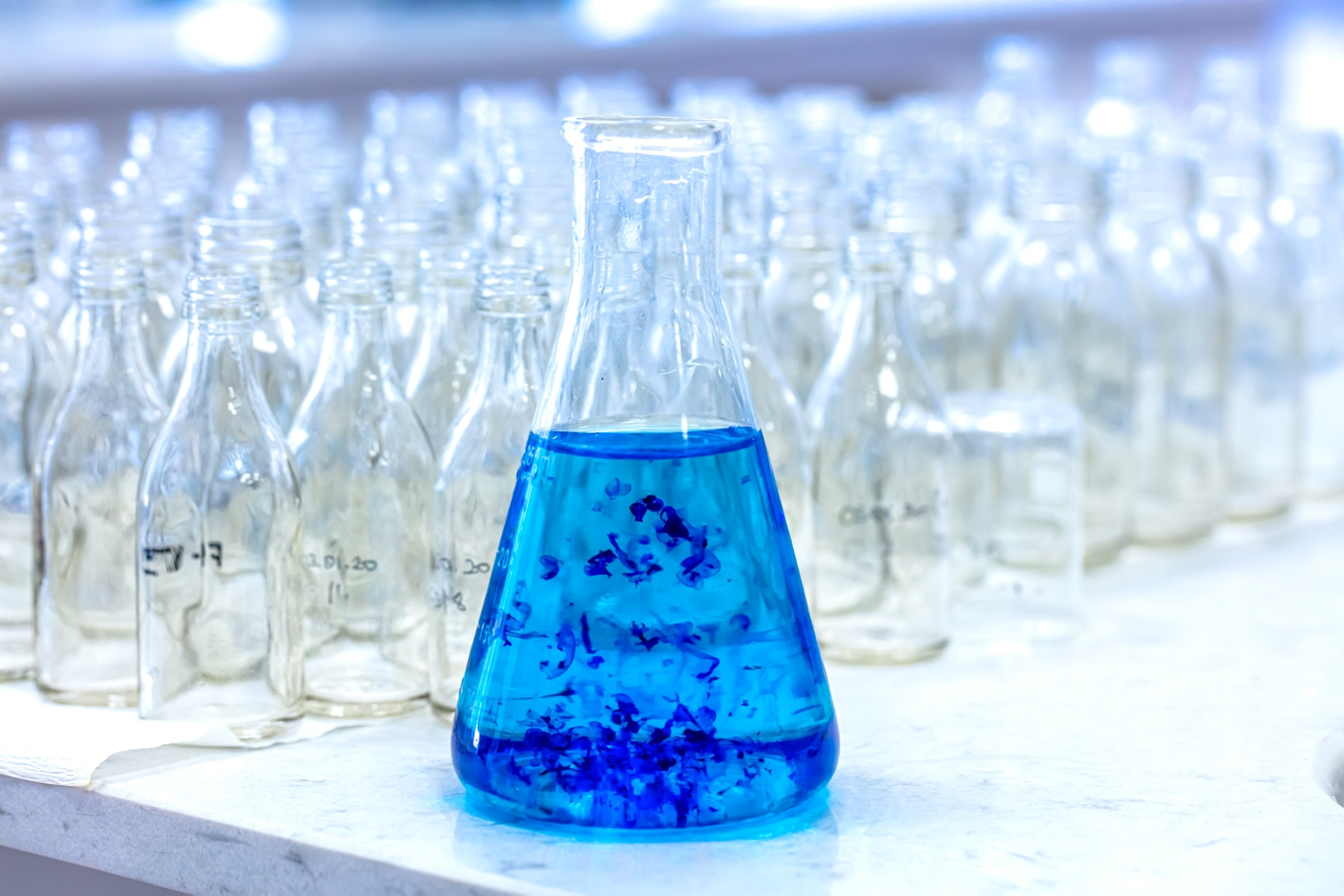
 Test tubes with chemicals with atoms in blue color Chemical bonding
But here's where it gets interesting: the indigo dye doesn't actually penetrate the cotton fibers. Instead, it forms a ring around them, like a tiny, blue donut. This is why blue jeans can fade over time - the indigo dye can wear off, revealing the lighter cotton underneath. It's like a tiny, denim time capsule!
Blueberries: Nature's Little Blue Factories
Let's not forget about those delicious blueberries! The blue color in blueberries comes from a type of pigment called anthocyanin. Anthocyanins are a group of flavonoids that give many plants their blue, red, and purple colors. In blueberries, the anthocyanins are produced when the fruit is exposed to sunlight.
 What Chemical Turns Water Blue at Christopher Hannan blog
Here's where it gets a little weird (in a good way!): blueberries aren't actually blue on the inside. The flesh of a blueberry is mostly white or light green. It's the anthocyanins in the skin that give blueberries their blue hue. So, when you bite into a blueberry, you're essentially eating a tiny, tasty, blue-skinned fruit!
Blue: The Color of the Universe
From the sky to our clothes to our favorite fruits, blue is everywhere. And now you know a little bit more about how it gets there. Isn't that cool? So, the next time you look up at the blue sky or put on your favorite blue shirt, remember the science behind the color. It's like a little secret between you and the universe.
Feeling inspired to learn more? There's a whole world of color out there, just waiting to be discovered. So go ahead, ask questions, explore, and most importantly, have fun! After all, learning should be as colorful as the world around us.
