What Do Seismic Waves And Sound Waves Have In Common?

So, there I was, standing in the middle of a bustling city street, when suddenly, the ground beneath my feet started to tremble. My heart skipped a beat, my mind raced, and I...
So, there I was, standing in the middle of a bustling city street, when suddenly, the ground beneath my feet started to tremble. My heart skipped a beat, my mind raced, and I thought, "Is this it? The big one?" But then, as quickly as it started, the shaking stopped. It was just a lorry rumbling by, shaking the very foundations of the city. Phew!
Now, you might be thinking, "What's the big deal? It was just a lorry." But it got me thinking, what if that lorry was a seismic wave, and the city was the Earth? Suddenly, that rumble didn't seem so harmless anymore. And that, my friends, is where our little story connects to the fascinating world of seismic waves and sound waves.
When Worlds Collide
You might be wondering, "What do seismic waves and sound waves have in common? Aren't they completely different?" Well, yes and no. While they do have some key differences, they also share some striking similarities. So, grab a cup of coffee, get comfortable, and let's dive in!
Must Read
Same Wavelength, Different Vibes
Let's start with the most obvious similarity - they're both waves! Now, I know what you're thinking, "Duh, of course, they are!" But bear with me, because this is where things start to get interesting.
You see, both seismic waves and sound waves are a type of mechanical wave. This means they need a medium to travel through - like air for sound waves or the Earth's crust for seismic waves. They both move energy from one place to another by making the particles of the medium vibrate.
But here's where it gets a bit more technical. Both types of waves have something called a wavelength. This is the distance between two consecutive peaks or troughs of a wave. The wavelength determines the frequency of the wave - the higher the frequency, the shorter the wavelength, and vice versa. Confused yet? Don't worry, we'll keep it simple!
Frequency is the Name of the Game
Now, let's talk about frequency. This is essentially the number of vibrations a wave makes in one second. Sound waves have a frequency range of about 20 to 20,000 Hertz (Hz), which is the range that human ears can detect. Seismic waves, on the other hand, have a much lower frequency range, typically between 0.01 to 10 Hz.
 Unraveling The Mysteries: Sound, Seismic, And Radiant Waves Explained
But here's where it gets interesting. You might have heard that dogs can hear sounds that humans can't, right? That's because dogs can detect sounds with frequencies up to 45,000 Hz, which is way higher than what humans can hear. Similarly, some animals, like elephants, can detect infrasound - sounds with frequencies below 20 Hz, which is the lower limit of human hearing. So, while we can't hear seismic waves, some animals can!
P and S Waves: The Dynamic Duo
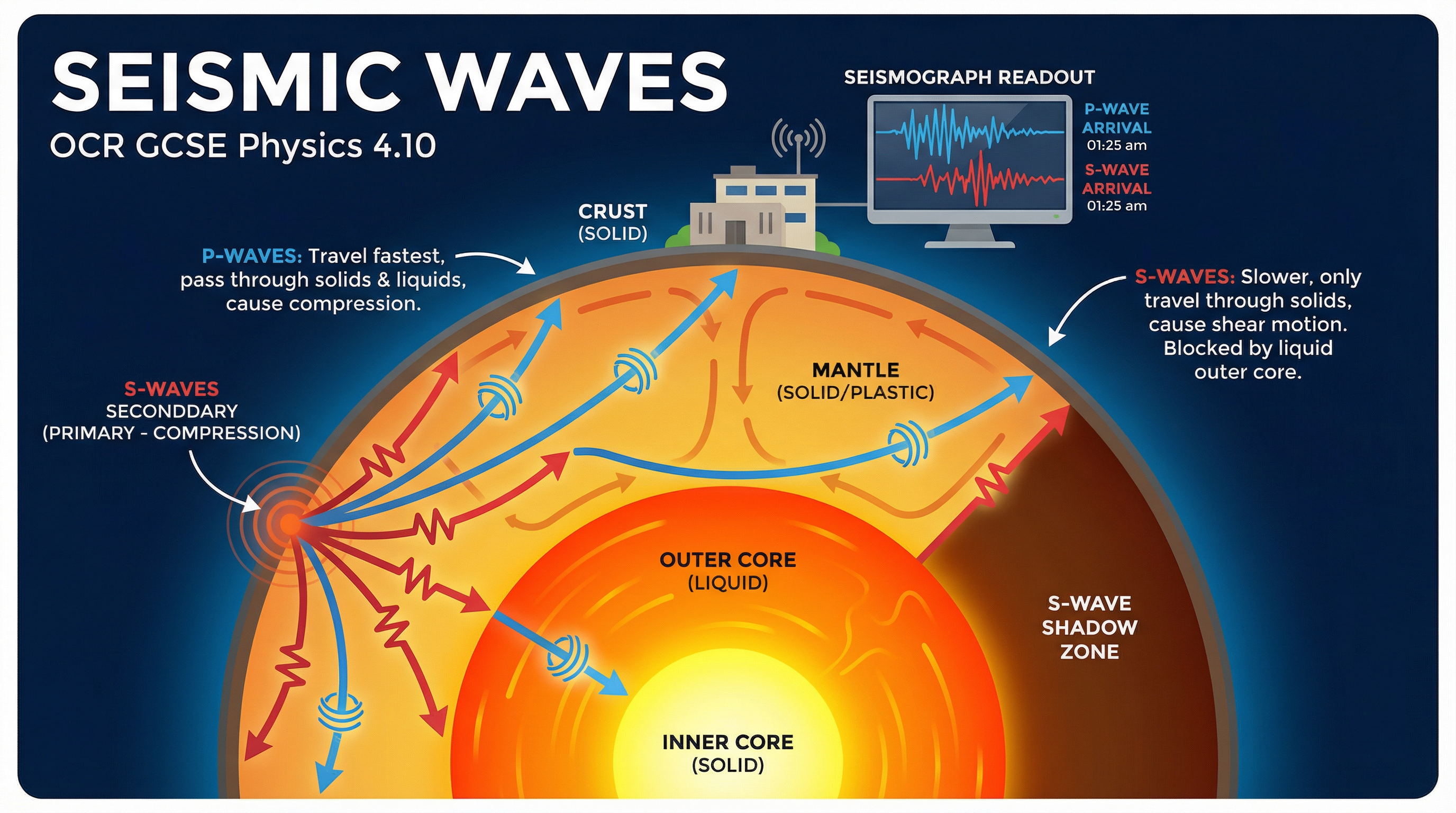
Now, let's talk about the different types of seismic waves. There are two main types: Primary (P) waves and Secondary (S) waves. P waves are like the speedsters of the seismic world, traveling through the Earth's interior at about 5-7 km/s. They're compressional waves, meaning they squeeze and stretch the material they pass through.
S waves, on the other hand, are like the heavy hitters. They travel more slowly, at about 3-4 km/s, and they're shear waves, meaning they cause the material they pass through to slide past each other. Sound waves, you might be thinking, are a bit like P waves, aren't they? They're compressional waves too, after all!
Surface Waves: The Party Crashers
But wait, there's more! There's a third type of seismic wave, called surface waves. These are the slowpokes of the seismic world, traveling at about 2-4 km/s. They're responsible for most of the damage caused by earthquakes, as they travel along the Earth's surface, shaking and rolling like a slow-motion earthquake simulator.
Sound waves have their own version of surface waves too - they're called Rayleigh waves. These are the waves that cause the surface of a pond to ripple when you throw a pebble in. They're a combination of compressional and shear waves, and they travel at about 140-160 m/s in air.
 PPT - Mechanical Waves By: Nicholas B and Michael P PowerPoint
So, What's the Verdict?
Well, my friends, while seismic waves and sound waves do share some similarities, they're also quite different. Seismic waves are much slower, have a lower frequency range, and can travel through solid materials. Sound waves, on the other hand, are faster, have a higher frequency range, and need a medium to travel through.
But here's the thing - both types of waves are a result of vibrations. They're both a way for the universe to communicate, to tell us stories about the world around us. Whether it's the rumble of a lorry, the roar of a lion, or the grumble of the Earth's crust, these waves are a constant reminder that our world is alive, dynamic, and full of wonder.
So, the next time you feel the ground shake or hear a loud noise, take a moment to appreciate the magic of waves. They're more than just vibrations - they're a symphony of the universe, playing a song only it can hear.
And remember, if you ever find yourself in the middle of an earthquake, don't worry - it's not just a lorry rumbling by. It's the Earth saying, "Hello, I'm still here!" Just make sure to drop, cover, and hold on, okay?
Until next time, stay curious, and keep exploring the fascinating world of waves!
