When Should Drivers Consider Fitting A New Set Of Tyres?

So, you're cruising down the highway, wind in your hair, tunes blasting, feeling like you're in a music video. Suddenly, your car starts handling like it's on ice. You're not...

So, you're cruising down the highway, wind in your hair, tunes blasting, feeling like you're in a music video. Suddenly, your car starts handling like it's on ice. You're not in a winter wonderland, you're just trying to make it to the next exit. What's up with that?
Chances are, your tires are crying for help. They're like your car's sneakers, and they've worn out their soles. But how do you know when it's time to swap them out? Let's grab a coffee and chat about it.
Tread Depth: The Canary in the Coal Mine
Think of your tire's tread like a canary in a coal mine. When it's gone, it's time to get out. In this case, that means it's time for new tires. But how deep is too shallow?
Must Read
Check the penny test: Stick a penny into your tire's tread groove with Lincoln's head upside down. If you can see all of Lincoln's head, your tread depth is less than 2/32 inch and it's time for new tires. Easy peasy!
But Wait, There's More!
Tread depth isn't the only thing to consider. Tires have a lifespan, and even if they look fine, they might be past their prime. How old are your tires? Check the four-digit number on the sidewall. The first two digits represent the week of manufacture, and the last two represent the year.
For example, if it's 3218, that means your tire was made in the 32nd week of 2018. If your tires are more than six years old, it's a good idea to replace them, even if the tread looks okay. Tires degrade over time, and old tires are more likely to fail.
 New Tyre
Weathering the Storm
Living in a place with four seasons? You know the drill: winter tires for snow, all-seasons for the rest of the year. But when should you make the switch?
As a general rule, swap to winter tires when the temperature consistently drops below 7°C (45°F). Why? Winter tires have a different rubber compound that stays soft in cold temps, providing better grip on snow and ice. Plus, their tread patterns are designed to evacuate water and slush.
But What About All-Season Tires?
All-season tires are great for mild climates, but they're a compromise. They're not as good as winter tires in snow, and not as good as summer tires in heat. So, if you live somewhere with harsh winters and hot summers, you might want to consider switching tires twice a year.
Driving Habits: The Elephant in the Room
How you drive can also affect how quickly your tires wear out. If you're the type who takes corners like they're on the F1 circuit, or you've got a lead foot, your tires might not last as long. Same goes if you're always carrying a heavy load or towing a trailer.
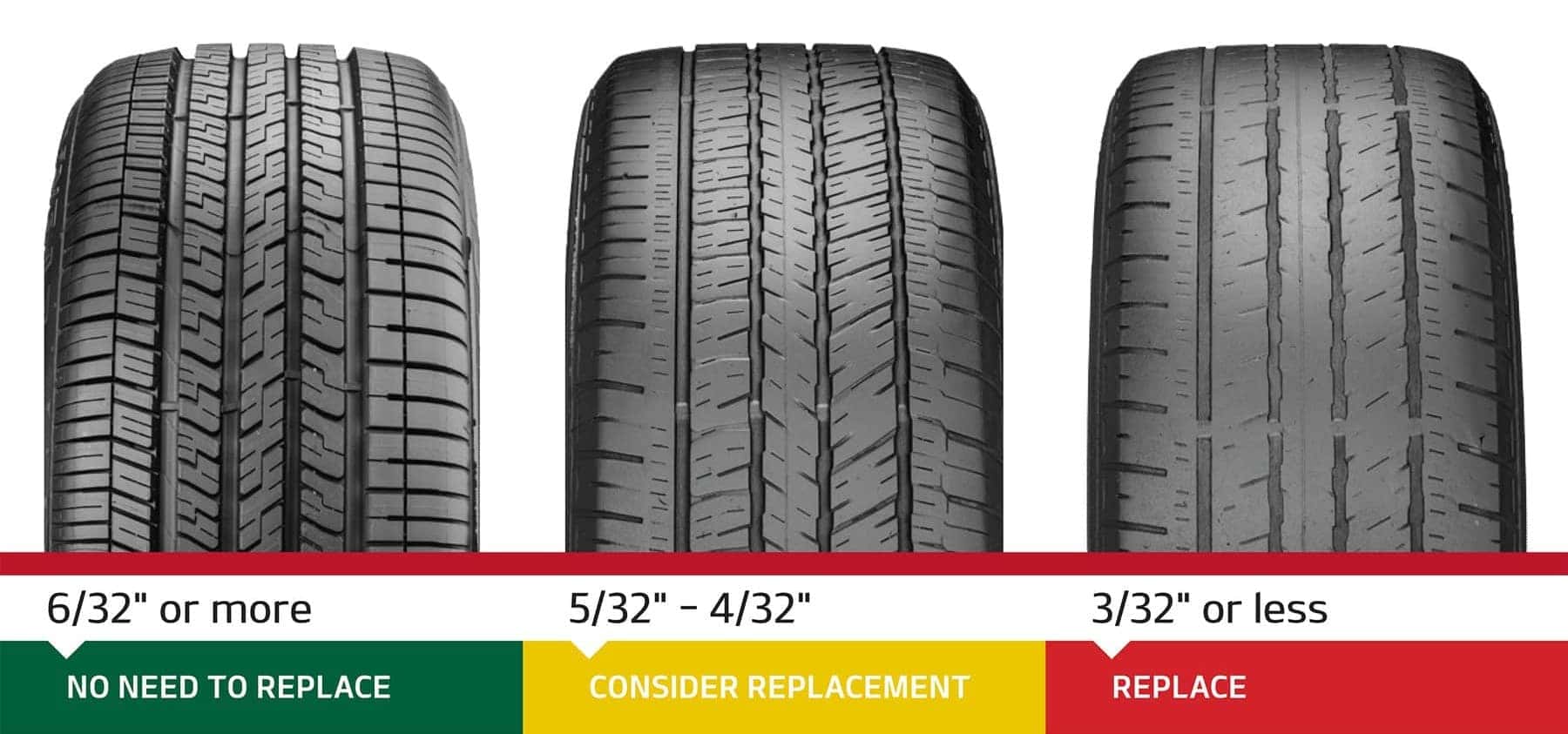 How To Know When To Get New Tires
On the other hand, if you're a gentle driver who never pushes the limits, your tires might last longer. But remember, even the most careful driver can't prevent normal wear and tear.
Safety First, Folks
At the end of the day, it's all about safety. Worn-out tires are a hazard, and they can fail at any moment. So, don't wait until you're skidding down the highway to think about your tires. Check them regularly, and replace them when it's time.
And hey, while you're at it, check your tire pressure too. Proper inflation can extend the life of your tires and improve your gas mileage. It's a win-win!
So, what do you think? Ready to give your car a new pair of sneakers? Just remember, when it comes to tires, safety isn't something you want to skimp on. Happy driving!
