Emulsifying Agent For Oil And Water

So, picture this: you're in the kitchen, whipping up a fancy schmancy salad dressing. You've got your olive oil, your balsamic vinegar, and you're feeling like a culinary rock...
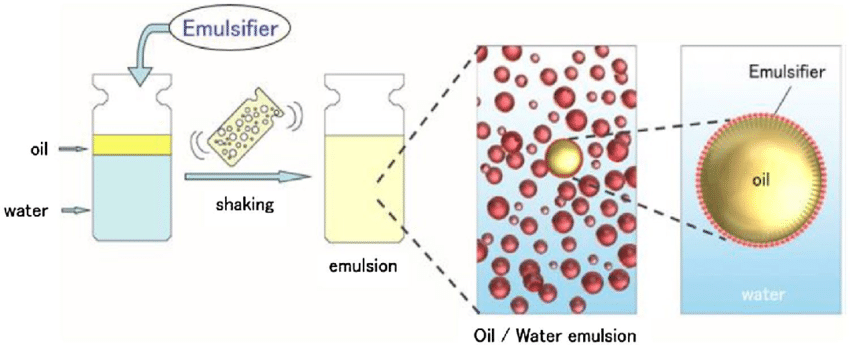
So, picture this: you're in the kitchen, whipping up a fancy schmancy salad dressing. You've got your olive oil, your balsamic vinegar, and you're feeling like a culinary rockstar. But then, disaster strikes! You pour the oil and vinegar together, and instead of a smooth, glossy dressing, you get a sad, separated mess. What gives?
Enter: Emulsifiers, the Oil and Water Matchmakers
Emulsifiers, my friend, are the wingmen of the culinary world. They're the ones who make sure your vinaigrette doesn't split, your mayonnaise stays smooth, and your ice cream doesn't turn into a soupy mess. They're like the Switzerland of the food world, keeping oil and water happy and together.
Now, you might be thinking, "But oil and water don't mix! They repel each other like my ex's cat repels my dog!" And you're right. But emulsifiers are like the sneaky, persistent friend who won't take 'no' for an answer. They grab onto both oil and water molecules, holding them together in a happy, stable emulsion.
Must Read
Surfactants: The Emulsifier Squad
Emulsifiers are a diverse bunch, but they all have one thing in common: they're surfactants. That's a fancy word for 'surface-active agents'. They're like tiny, tiny lifeguards, patrolling the border between oil and water, making sure they play nice.
Some surfactants have a water-loving (hydrophilic) head and an oil-loving (lipophilic) tail. They stick their hydrophilic head into the water, their lipophilic tail into the oil, and voila! They've created a bridge between the two. Other surfactants work by reducing the surface tension between oil and water, making it easier for them to mix.
Emulsifiers in Action: A Tale of Two Dressings
Let's take our salad dressing example. Without an emulsifier, your oil and vinegar would just sit on top of each other, like two teenagers at a dance, too cool to talk to each other. But add an emulsifier, like mustard or an egg yolk, and suddenly, they're slow dancing together, smooth as can be.
Take mayonnaise, for instance. It's basically an emulsion of oil, egg yolk (which contains lecithin, a natural emulsifier), and vinegar or lemon juice. Without the egg yolk, you'd just end up with a sad, separated mess. But with it, you've got a creamy, delicious spread that's perfect for sandwiches or as a dip for your fries.
 Emulsion, a mixture of two immiscible liquids (oil and water) in
Emulsifiers in the Wild: Not Just for Food!
Emulsifiers aren't just for the kitchen, though. They're everywhere! They're in your shampoo, helping to mix the oil-based ingredients with the water-based ones. They're in your paint, making sure the pigments stay suspended in the water-based solution. They're even in your perfume, helping to mix the oil-based fragrance with the water-based alcohol.
And here's a fun fact for you: Did you know that the Eiffel Tower 'paints' itself every seven years? That's because the iron in the tower reacts with oxygen in the air, forming a thin layer of iron oxide that flakes off. But here's where emulsifiers come in. The paint used to protect the tower contains emulsifiers that help to mix the pigments with the water-based binder, ensuring even coverage and protection.
Emulsifiers Gone Wild: When Too Much of a Good Thing Isn't Good
Now, while emulsifiers are amazing, they can also be a bit too good at their job. Too much of an emulsifier can make it hard for your food to separate when you want it to. For instance, too much lecithin in your chocolate can make it hard for the cocoa butter to crystallize, resulting in chocolate that's too soft or seizes up.
And then there are the emulsifiers that aren't so great for us. Some food emulsifiers, like mono- and diglycerides, are made from partially hydrogenated oils, which are high in trans fats. Trans fats can raise your bad cholesterol levels and lower your good cholesterol levels, increasing your risk of heart disease. So, it's always a good idea to check your labels and look for emulsifiers that are natural and healthy, like lecithin, mustard, or egg yolks.
 What Is An Example Of An Emulsifying Agent – KRKRB
Emulsifiers and the Environment: A Complicated Relationship
Emulsifiers aren't just good for our food; they're also good for the environment. They're used in many eco-friendly products, like biodegradable detergents and green paints. But they can also be a problem. Some emulsifiers, like certain types of surfactants, can be toxic to aquatic life and take a long time to break down in the environment.
So, while emulsifiers are our friends in the kitchen and beyond, we need to use them responsibly. That means choosing natural, biodegradable emulsifiers when we can, and making sure they're disposed of properly.
In Conclusion: Emulsifiers, Our Unsung Heroes
Emulsifiers are the unsung heroes of the food world. They're the ones who make sure our dressings are smooth, our mayonnaise is creamy, and our ice cream is scoopable. They're the ones who make sure our shampoo lathers, our paint covers, and our perfume smells amazing. They're the ones who make sure oil and water can play nice, and for that, we should all be grateful.
So, the next time you're in the kitchen, whipping up a culinary masterpiece, remember the emulsifiers. They're there, working tirelessly behind the scenes, making sure your dish is the best it can be. And isn't that something worth raising a glass (of emulsified cocktail, of course) to?
